ATAC-seq identifies genome-wide open chromatin regions that may be accessible to transcription factors and other DNA-binding proteins, including regulatory regions such as promoters and enhancers. It uses a hyperactive Tn5 transposase on unfixed nuclei, typically requires fewer cells than ChIP-seq, and has a relatively simple experimental workflow.
ChIP-seq maps the genomic binding sites of a specific protein or a specific histone modification using an antibody against the target of interest. It uses crosslinked chromatin, typically requires more input material, and is more labor-intensive.
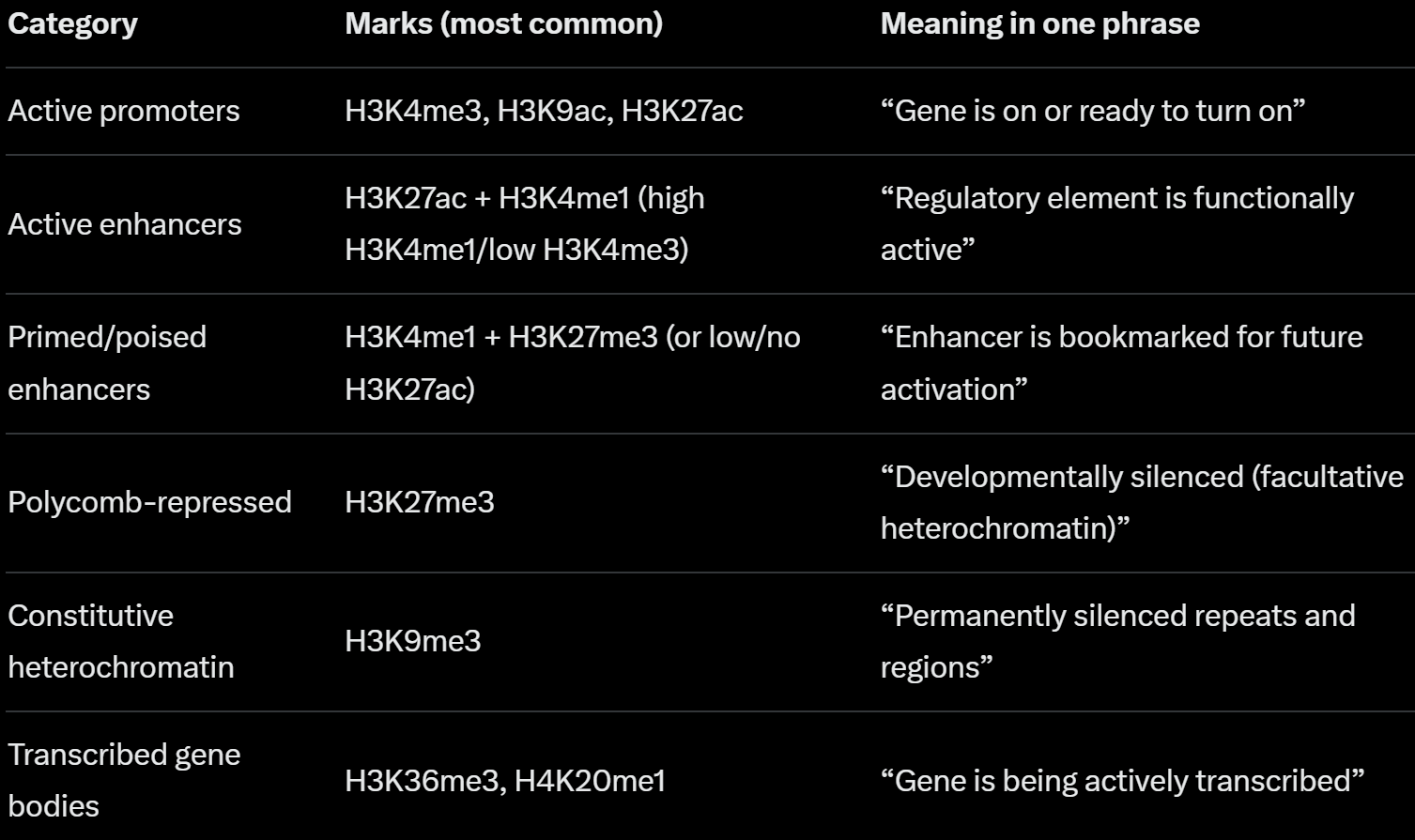
The following diagram summarizes six common histone modifications.
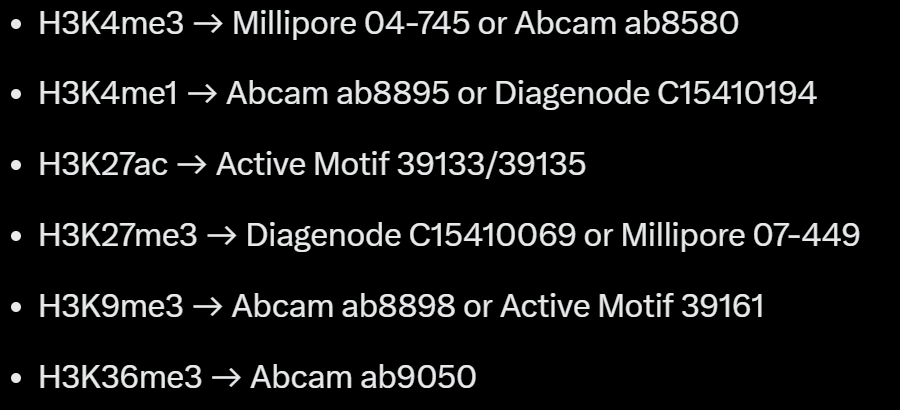
The next diagram shows a commonly used antibody panel for mapping histone modifications.